A neighbor had it done. Or a flyer showed up in the mailbox. Either way, it sounds like a gimmick.
Fair enough. Here’s what actually happens, in plain words, so you can judge it yourself. Your shingles are drying out. The treatment is a plant-based oil that soaks back into them so they bend again. That’s the whole idea. It’s not magic, and it’s not a repair. We do it on shingle roofs across South Montgomery County.
What the sun does to a shingle
An asphalt shingle is a thin mat coated in asphalt, with colored granules pressed into the top. New asphalt is full of oils. The oils keep a fresh shingle soft enough to bend.
Heat and UV cook those oils out a little every summer, and summers here run long. Houston’s main airport averages 102.4 days a year at 90°F or hotter (1991 to 2020 normals). The average UV index there is 10.3 in June, 9.9 in July and 9.5 in August.
As the oils go, the shingle changes. It gets stiff. Its edges curl or cup. It cracks when it flexes. It can’t hold on to its granules, so they wash into your gutter. Our guide to the signs your roof is aging shows what each of those looks like up close.
What goes on the roof
The treatment is Bright Green Roof, a plant-based oil. Bright Green Roof says it replenishes the bitumen in the shingle. Bitumen is the asphalt. In plain words, it puts back the oil the sun took out.
It’s 100% active, so it isn’t mixed with water before it goes on. The dealer page Bright Green Roof keeps for C&D says every drop that touches the shingles gets absorbed. It’s also a USDA Certified Biobased Product. Here’s why we use a bio-based treatment, and what that label does and doesn’t tell you.
Penetrant or coating: what’s the difference?
This is the part people mix up most. A coating is a layer that sits on top of the roof, a bit like paint. A sealant fills seams and gaps. A penetrant soaks into the material itself.
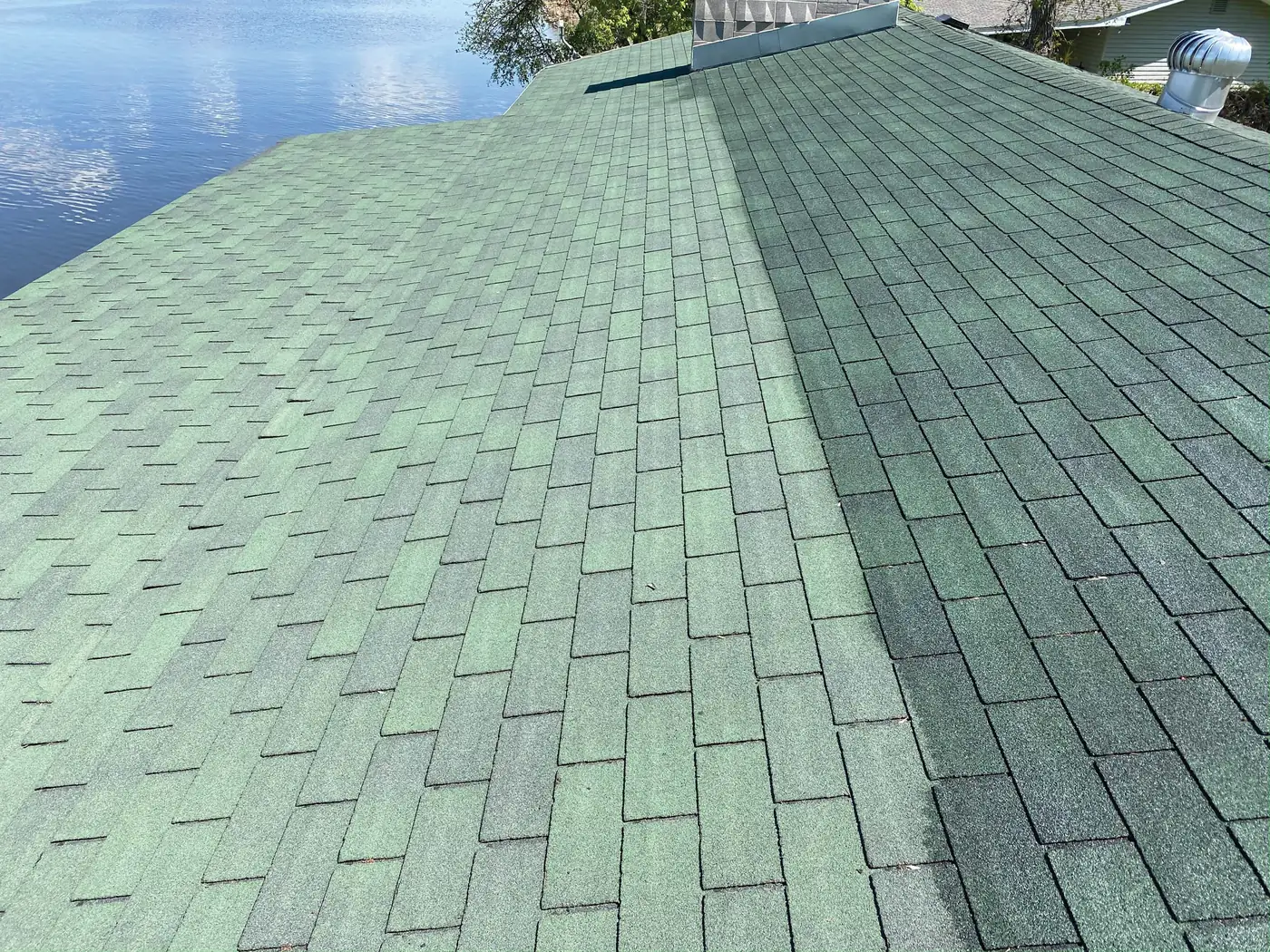
The Bright Green Roof treatment is a penetrant. Once it soaks in, there’s no film on top of your shingles. The change happens inside them. They have oil in them again, so they can bend instead of crack.
If someone offers to treat your roof, ask which kind they’re selling. A coating and a penetrant are different products that do different jobs.
Treatment day, from start to finish
- The free assessment. Chris photographs the roof and decides whether it’s a candidate. If it isn’t, we stop there, and you keep the photos.
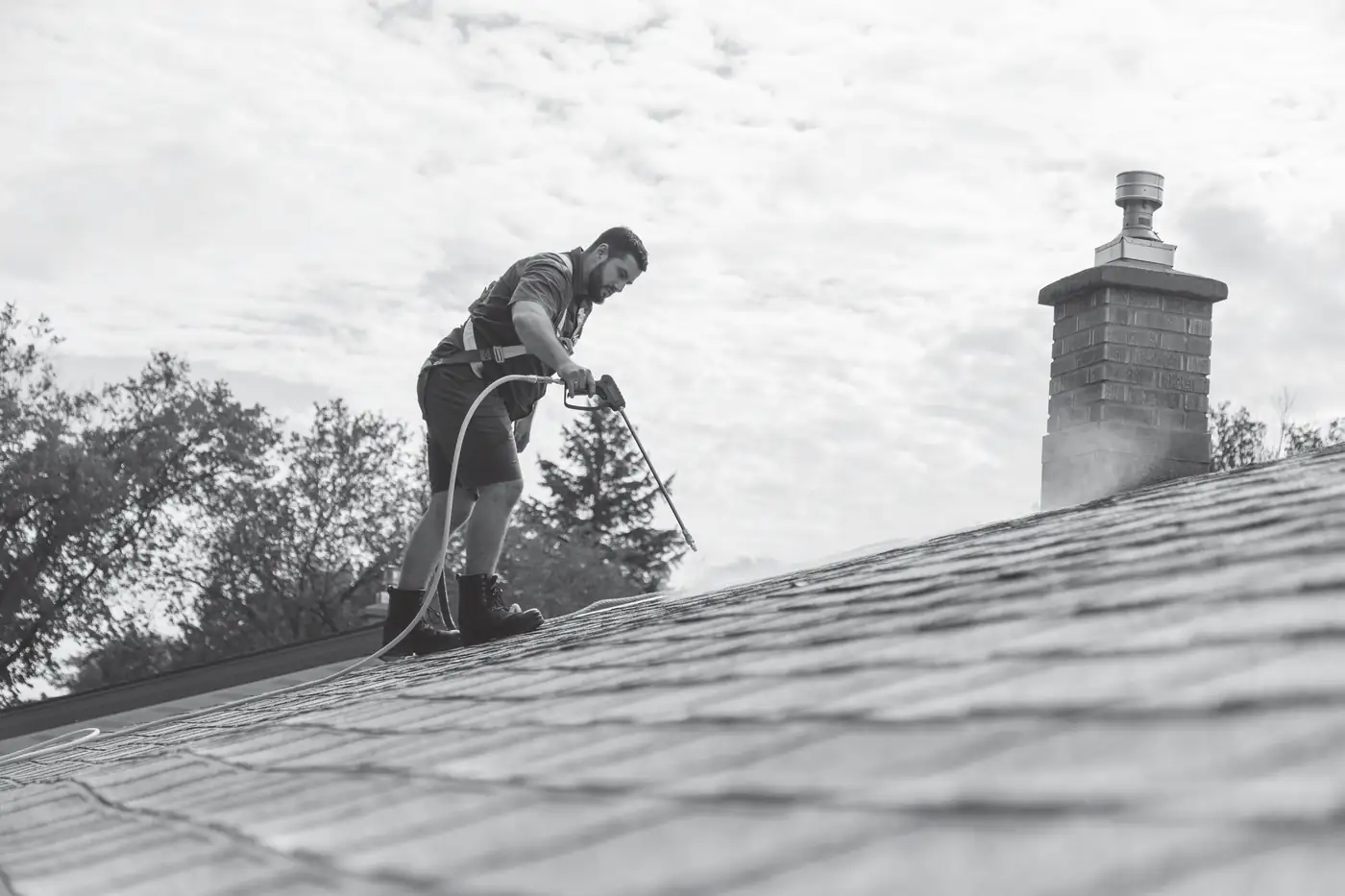
- The cleaning. We soft wash the roof to lift off algae, dirt and needles so the oil can reach the shingle. A pressure washer never touches your shingles. See roof cleaning and soft wash.
- The forecast. We pick a dry day. We don’t spray with rain on the way.
- The spray. Every slope gets treated, including the ones you can’t see from the street. One Bright Green Roof dealer quotes two to three hours to treat a typical roof.
- The after photos. You get every slope again, so you can see it was all done, plus the warranty paperwork.
Nobody needs to come inside the house.
What the treatment can’t do
A treatment is maintenance, not a repair. Here’s what it can’t do.
- Stop a leak. Leaks come from flashing, pipe boots, nails and missing shingles.
- Replace a shingle that’s missing or broken.
- Bring back granules that already washed away.
- Rescue a roof with the mat showing through.
If Chris finds any of those, he shows you in the photos and points you to a roofer. We don’t do repairs, so there’s nothing for us to upsell.
When to treat, and how often
Bright Green Roof says to start at the five-year mark, and to treat once shingles are ten years or older. One of its dealers adds that roofs past 20 can still be treated if they’re in good condition. Treating sooner means more of the shingle’s own oil is still there to keep.
The product can go on up to three times over a roof’s life. Bright Green Roof rates each application for up to ten years. Its FAQ puts the written warranty at five years, transferable, on flexibility. For price and the free assessment, see the roof rejuvenation overview.
Want to know where your roof stands? Book a free roof inspection, or call or text (281) 466-7436.
Common questions
How long does the treatment take on a typical house?
One Bright Green Roof dealer quotes two to three hours to treat a typical roof. The soft wash comes first and adds its own time, and a steep or tall roof takes longer. Think hours, not days. We set the day around the forecast, since we don’t spray with rain coming. Chris tells you the plan when he books it.
Why does the roof get cleaned first?
The oil has to touch the shingle to soak in. Algae, dirt and pine needles sit on top of the granules and get in the way. So every treatment starts with a soft wash, and the cleaning is part of the $1.00 to $1.50 per square foot price. If all you want is the cleaning, we do that on its own too.
Does it bring back granules my roof already lost?
No. Granules in your gutter are gone for good, and no treatment puts them back. What it does is put oil back into the asphalt so the shingle bends again. That’s why Chris looks so hard at granule cover. One cost guide says that if more than 40% of the granules are gone, replacement may be the better option.
Can a roof older than 20 years be treated?
Sometimes. One Bright Green Roof dealer puts it plainly. Roofs older than 20 years can still be treated as long as they’re in good condition. Age alone doesn’t decide it. Shingles that lie flat, still bend a little and still hold their granules can qualify. Shingles that crack when bent, or show the mat, can’t. The free assessment tells you which you have.