You’re scooping out the gutters, and your glove comes up full of black grit. That grit used to be on your roof.
Shingles are made with asphalt, and the sun dries asphalt out. Around Spring, the sun gets plenty of time to work. At Bush Intercontinental Airport, the average year has 102.4 days at or above 90 degrees. The average UV index tops 9 in June, July and August, per the Houston climate normals for 1991 to 2020. Every one of those days bakes the roof a little more.
1. Granules in the gutters and at the downspouts
Look for dark grit in the gutters, or a little fan of it where a downspout empties after a rain.
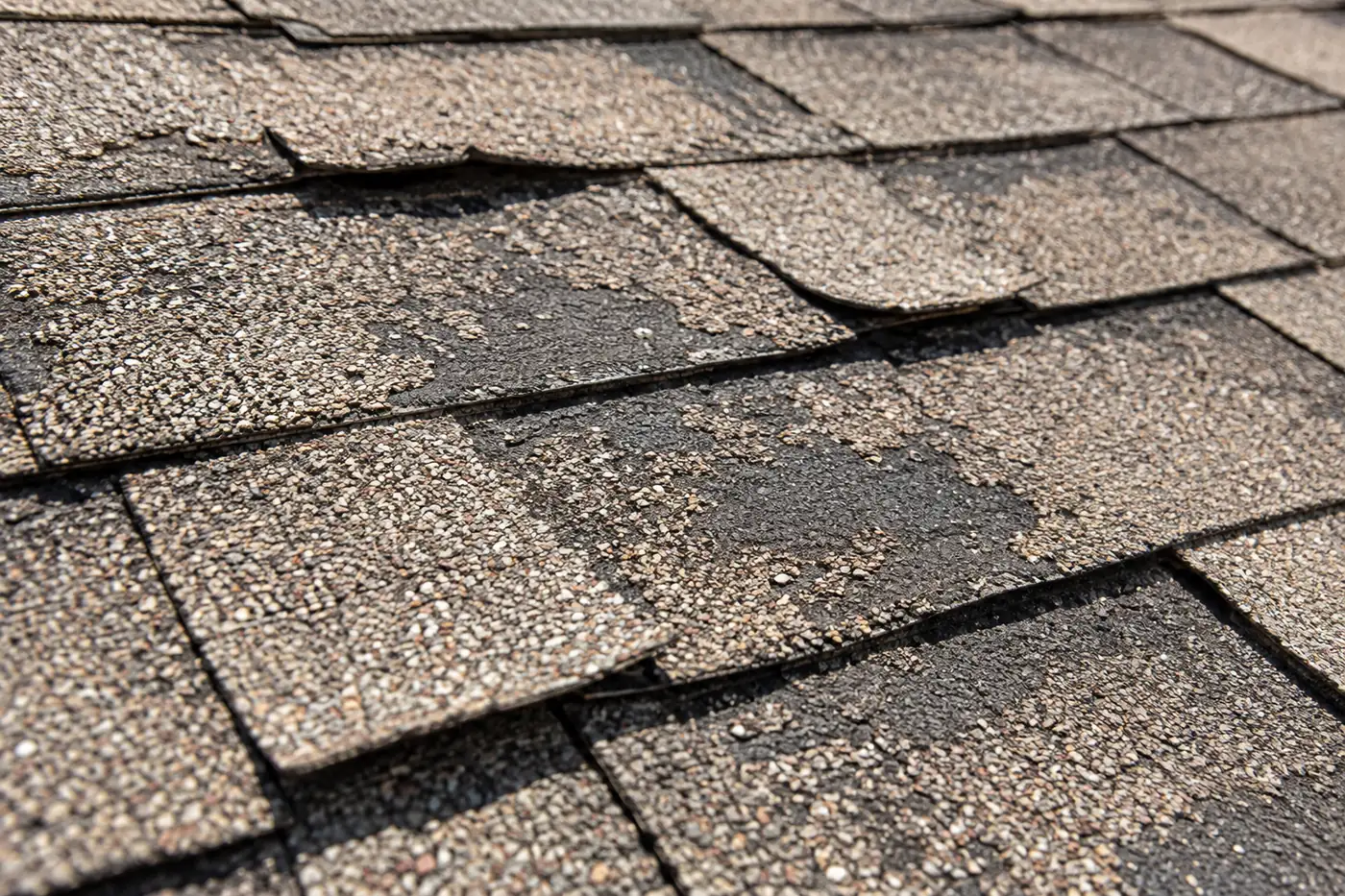
What it means. Granules are the grit pressed into the top of every shingle. When they start washing off, the shingle is wearing.
Does a treatment help? Only if you catch it early. A treatment can’t glue granules back on. It soaks into the shingle and keeps it flexible, which suits a roof that still has most of its grit. One cost guide puts the line at about 40% gone, and past that we’ll tell you to get replacement quotes instead. Rather not dig through the gutters yourself? We do gutter cleaning too, and we’ll show you what came out.
2. Faded color
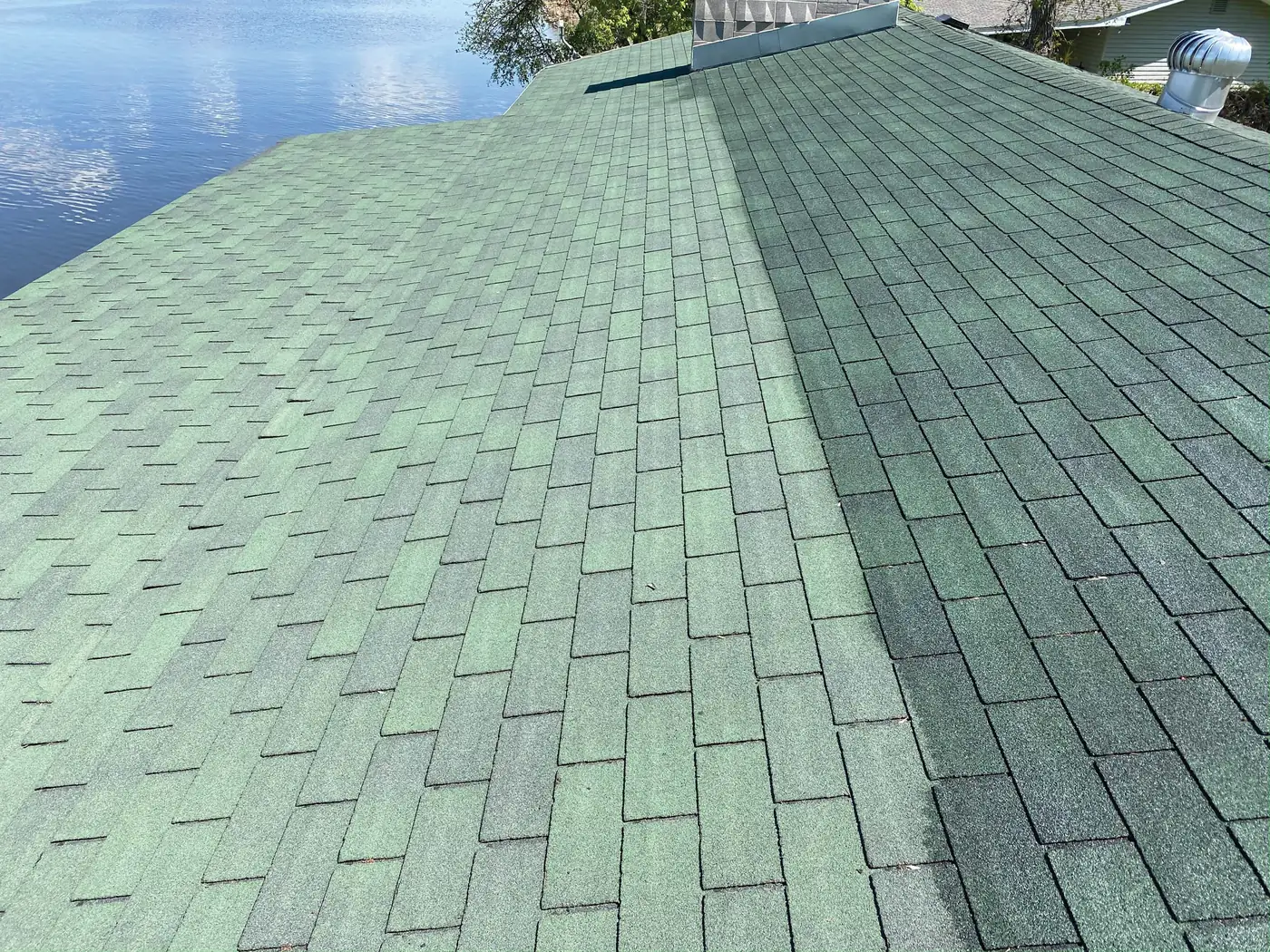
The roof looks lighter or blotchier than it used to. Compare the side that gets the afternoon sun with the side that doesn’t.
What it means. Years of sun. Fading by itself is about looks, but it tells you the roof has been out there a while.
Does a treatment help? Bright Green Roof says its treatment restores the shingle’s original color. That’s a nice bonus. The real reason to treat is flexibility, so check for the signs below before you decide.

3. Black streaks
Dark stripes running down the roof, often where trees shade it.
What it means. This one isn’t age. It’s algae, the kind roofers call Gloeocapsa magma. Damp air helps it grow, and the average relative humidity at the airport is 74.7%.
Does a treatment help? No. A cleaning does. We take the streaks off with a soft wash, not a pressure washer. Roof cleaning comes first on every treatment job, and you can book it on its own.
4. Edges curling or cupping
Corners that turn up, or shingle edges that rise while the middle sinks. You can often spot it along the bottom rows from the yard.
What it means. The shingle is drying out and losing its shape.
Does a treatment help? Early on, yes. A roof with a few lifting edges is a good candidate, since the oil soaks in and keeps the shingle flexible. Tabs curled up hard, like potato chips, are past it.
5. Shingles that crack when bent
You can’t see this one from the ground. On the roof, a healthy shingle gives a little when you lift a corner. A dry one cracks.
What it means. The asphalt has dried out and lost its flex.
Does a treatment help? This is the sign it’s made for. Bright Green Roof’s written warranty says the treated shingle will stay pliable and flexible for 5 years, and the warranty transfers if you sell. A shingle that’s already cracked through stays cracked, though. Chris tests flexibility on the roof, so you don’t have to.
6. Bald spots with exposed mat
Patches where the grit is gone and the shingle looks smooth or a different color. A phone zoom sometimes picks these up from the ground.
What it means. The granules have worn down to the mat, the base layer inside the shingle. Nothing is left on top.
Does a treatment help? No. Nothing brings granules back. Exposed mat across the roof means it’s time for replacement quotes, and Chris will say so. If anyone offers to treat a roof like that, say no thanks.
7. Nail pops
A small bump under a shingle, or a nail head sticking up where it shouldn’t.
What it means. A nail has backed out of the wood. It can lift the shingle above it and leave a gap for water.
Does a treatment help? No. A nail pop is a repair, and we don’t do repairs. Chris flags each one in the photos so a roofer can fix it. A few fixed nail pops don’t rule out treating the rest of the roof.
What to do with what you found
Add up what you saw. Signs 1, 2, 4 and 5 mean the roof is drying out. Caught early, that’s what roof rejuvenation is for. Sign 3 is a cleaning job. Sign 6, sign 7 and any leak need a roofer before anything else.
Next, run our candidate checklist. It turns what you saw into a yes or a no.
Chris likes to put it this way: “Take care of your roof today, and it will take care of your home tomorrow.” The easiest place to start is a free roof inspection. Chris looks for all seven signs, photographs every slope and sends you the pictures. Call or text (281) 466-7436.
Common questions
Do these signs mean I need a new roof?
Most of them don’t. Granules in the gutters, fading, curling edges and stiff shingles mean a roof is drying out. A sound roof like that can be treated. Black streaks just need a cleaning. Exposed mat, shingles cracked through and active leaks are different. Those point to a roofer. Chris looks at the whole roof before he answers, and you get the photos either way.
How often should I check my roof for these signs?
Once a year, and again after any hail or high wind. Pick a day when you’re already out cleaning the gutters. Or let us do it. The C&D Annual Roof Checkup is a yearly visit. Chris photographs the roof, clears the needles off the shingles and empties the gutters. After hail or wind, you also get a storm check.
Should I climb up and check my roof myself?
No. Leave the climbing to Chris. Most of these signs show up from the ground, in the gutters or at the bottom of a downspout. Your phone’s zoom handles the rest. The one you can’t check from the yard is flexibility, because someone has to lift a shingle to test it. That’s part of the free roof inspection.